
Strategic Planning Process Columbus Ohio
Do you want a business that thrives?
If you answered yes, your company could benefit from having a strategic plan. Strategic planning is developing a comprehensive strategy to achieve your business objectives. It helps you identify strengths and weaknesses, set realistic goals and a unified message, and create a roadmap for success.
Losing focus is so easy and yet so costly.
Without a well-crafted strategic plan, your company may be slow to respond to changes in the marketplace, miss out on opportunities, struggle to attract top talent, and lose focus on what’s truly important to your customers and your own bottom line.
Failure is often the price companies pay for not having a focused, strategic plan.


Build a durable strategic plan for your company’s long-term success.
Look behind the bold edifice of any major achievement, and you’ll find strategic planning. Whether you’re launching your first big campaign or rocket to the moon, you need a durable strategic plan to map your course, identify weaknesses and opportunities, align teams behind a clear mission and set the goals and tactics to bring about success.
If you’re ready for success, you’re ready to develop a strategic plan.
Let us help you plan for progress and determine your unique strategic goals.
If you want to create a successful business that grows and thrives, it’s time to contact us today to learn more about our strategic planning services and how we can help you take your business to the next level.

Strategic Review
Get on the same page from top to bottom and end to end with messaging, collateral, branding, media, and more. Gain actionable insights about how your company is viewed internally and externally and how to unify direction across operations, aesthetics, and asset allocation.

Stakeholder Research
We take the temperature of your stakeholders, including customers, non-customers, executives, vendors, suppliers, staff, and social media followers. We develop the various personae with whom your brand needs to connect and utilize the power of story to compel them to take action.

Marketing Strategy & Implementation
We create and execute a holistic marketing strategy that clearly tells the company story, includes tactics, advertising assets, and messaging. These new marketing assets and implementation will establish an external value proposition while focusing on building a superior and recognizable brand.

Website Audit & Optimization
Based on the discovery phase, we provide a high-level brand, technical and competitive review of your current website. We recommend whether a refresh, reorganization, or rebuild is the best solution. After the initial migration, website updates, and fixes, we will scope out the best path forward to a fully optimized website experience for you and your users.

Brand Development & Design
With the knowledge gained from our research and review, we create a complete brand guideline, including brand uses, target personae, and overall brand strategy and messaging. We also make a full line of newly designed internal and external marketing assets (business cards, job site banners, email signatures, and more).

Improve ROI and Increase Sales
The four pillars of ROI success are analyzing, refining, strategizing, and measuring. As a component of your well-informed strategic plan, every aspect of ROI is an important measure of success as we work with you to build your brand, convert visitors to devoted customers, and contribute to your long-term success.
The Process to Getting Started is Simple
At Social Firm, we like to keep it simple. The less confusion, the better. The same goes for your business and customers.
Step One
Discovery & Research
During this phase, we gather information about your company, its environment, and its pain points, including talking to principal stakeholders, reading reports, and researching the market.
Step Two
Assessment
What is your company’s personality, resources, and assets, and how are they being developed and allocated? Does your team, from the C-Suite to the mailroom, share the same values and goals? Are they apparent to your customers through consistent marketing collateral and messaging?
Step Three
Recommendations
Based on the research and resource assessment, we develop a series of recommendations in an actionable plan for feedback and approval, along with any updated cost estimates. We determine what key assets to refresh or create, from website, brand guidelines, and logos to collateral, messaging, and media mix.
Step Four
Implementation & Measurement
We launch your campaign and track its progress with sophisticated analytics tools that measure conversions and KPIs to ensure continued marketing success.
This simple process can increase your chances of business success.
A thoroughly-researched strategic plan provides your company with a roadmap toward success. Your team can now focus on what matters and work proactively toward measurable, shared goals.
You’ll enjoy a unified direction across marketing and operations, and your company will benefit from consistent messaging and branding, leaving you plenty of opportunities to celebrate your successes.

A Going Concern Now Going, Going, Gone
It’s estimated that nearly 600,000 businesses fold each year. Your business can quickly go from being a “going concern” to going, going, gone. Without a comprehensive strategic plan informing your decisions, you’re likely to waste time and money, have no way to set and measure goals, motivate your team, connect with customers, and remain in business.

“Working with the Social Firm team on this project was seamless. We worked mostly with Brandon and he somehow knew what we wanted even before we ourselves knew. We couldn’t be more satisfied with the completed project. We will definitely be using their services again in the future.”

Michele Stokes
Airlite Plastics
"The Social Firm did a fantastic job helping our association clean up and refresh our social media accounts and presence. Their team was attentive to our needs and responsive to our feedback. With their assistance, our social media presence now looks more professional and our workflow in managing those accounts has improved."
Shawn Grime
Ohio School Counselor Association
"I'm currently working on two projects with Social Firm and to date can not come up with a single complaint about their ability, service, communication or character. They've been wonderful to collaborate with and have certainly earned any future business I need in the field. As my grandma would have always said, had my grandma ever dealt with them; You've always got firm footing with the Social Firm."
Phill Osaka
Boselon

"Great team. We prefer our marketing team to be personal and get to know the people behind the computer helping our business grow. SEO PPC Marketing in Columbus? Nobody better!"
Scott Weigand
Advantage Early Learning Academy

"Working with Social Firm has been phenomenal. Matt, Jason, and everyone I've worked with on their team were exceptionally professional, creative, and fun. They were able to understand our business, our market, and our clients and in turn provided us with a website that I couldn't be more proud of. I highly, HIGHLY, recommend them for web design and marketing needs. They love small businesses and make you feel like friends. I cannot thank them enough!"
Rachel Kutay
My Business Resource

"Professional, enthusiastic and great work! We look forward to a long partnership with the Social Firm. Thank you Jason and team for all your efforts."
Karen Greene-Rowe
Hammontree Growers

"Our technology consulting firm has worked with Social Firm on two projects so far and we are excited to continue our relationship. First, they have been amazingly quick to respond. Beyond that, I am thrilled with how well they seem to understand our needs and ask the right questions to bring us to the end result we are seeking. We are looking forward to working with them on so much more."
Cindy Snide
Revolution Group

"I looked around and considered many, many companies to help with my projects. After talking with this team, the search was over. These folks are the real deal, and I would urge you to consider what they might be able to do for you and your social presence. The cost, by the way, is very reasonable for the services provided, but it's the intangibles that make Social Firm such a valuable presence in my world."
Keith Stein
Midwestern Veterinary Dentistry and Consulting

"Since partnering with the Social Firm for website management and digital marketing, my medical practice has experienced a significant increase in new patient volume. They are a great team to work with!"
Dr. Garret Mouser
Moses-Mouser and Associates

"Matt and Social Firm have been a great marketing partner for our company! The website they built is fantastic! Matt and his team are very responsive to all of our needs! They have exceeded our expectations!"
William Kanipe
Patriot Air Comfort Systems

"I’m so thrilled to have hired such an amazing team of media geniuses that know everything there is to know about advertising for your business. My dog training company is booming with non stop calls and emails after hiring the Social Firm. I couldn’t be happier with the work they have done for promoting my small business!!"
Allison Marcum
Marcum K9 Obedience

"We had and continue to have a wonderful experience with "Social Firm." The development and implementation process for our new website was low-stress and easy. They communicated constantly with us and really were able to transform the vision of what we wanted, into reality. Social Firm also started SEO for our new business, which has been going well. Social Firm really has shown me what is available through SEO. So much so that we are moving all branches of our business to Social Firm. Highly recommend!"
Jackie Collins
Elder Law Connection

"Working with Social Firm makes everything seamless and easy. After doing my research and putting several projects out to bid, Social Firm blew all the others out of the water! Overall, the team at Social Firm continues to deliver breath-taking work that surpasses my expectations. I'm looking forward to continuing our partnership for many years to come! I highly recommend Social Firm to anyone looking for a 3rd party partner to extend their marketing efforts."
Austin Parkison
Sweet Manufacturing
Let’s unlock your brand's potential together.
Schedule a discovery call today to share your digital marketing and design goals and see how Social Firm can help.
Need digital marketing or design services? We have you covered.
Our versatile experience in digital marketing services in Columbus, OH, enables us to create pragmatic solutions and campaigns that genuinely have the power to transform brands by attracting new customers, inspiring existing customers, and presenting new possibilities.

Display Advertising
Visually represent your brand message in front of the right consumers at the right time with digital display advertising.

Search Engine Marketing
Get to the top of the search results immediately with PPC, or Pay-Per-Click digital marketing services like Google Search Ads (formerly AdWords) or Bing Ads.
Search Engine Optimization
We strive to get your website search results listed on page one organically for all your chosen SEO or search engine optimized focus key terms.
Graphic Design
Branding and marketing materials that truly convey your message clearly and effectively for any medium.

Review Management
Increase credibility by getting your reviews above 4 stars or better with the use of custom email and text campaigns.

Website Design
Online success always starts with a great website set up to convert visitors into paying customers. All Social Firm websites are mobile responsive and set up to convert your digital marketing and advertising efforts.

Social Media Advertising
Generate qualified leads and loyal fans by placing highly targeted ads on Social Media platforms like Facebook or LinkedIn.

Retargeting Advertising
Stay in front of your customers, even after they leave your website with this powerful top-of-mind digital advertising tactic.

Email Marketing
Connect more personally with your audience and expand your reach with meaningful email marketing.

Logo Design
Define your company’s appealing voice and unique personality in less than an inch of space with a truly compelling logo design.

Content Marketing
High-quality blog content that boosts organic website traffic through the use of crafted content calendars and A.I. driven SEO software.

Listings & Location Management
This powerful SEO tactic is perfect for businesses with one or multiple locations. Organize, optimize and maintain your location listings across the web.
News and Insights
What’s new and happening in the exciting world of marketing and design.
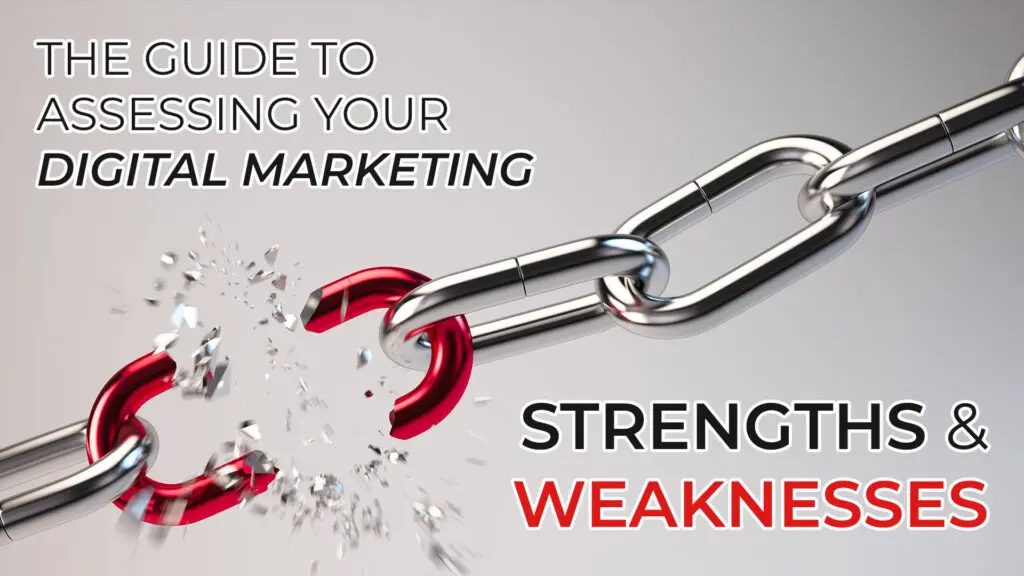
The Guide to Assessing Your Digital Marketing Strengths and Weaknesses
Evaluating your digital marketing efforts is akin to a health check-up for your brand's online well-being. It allows you to measure the pulse of your marketing campaigns, examine the efficacy of your strategies, and ensure that every effort aligns with your overarching business goals. Whether you're looking to increase brand awareness,...

How to Cultivate a Successful Client-Agency Relationship
A successful client-agency relationship transcends mere transactional exchanges; it is the most critical factor in ensuring that both the client and the agency can celebrate long-term success together. In this blog article, we will delve into the core principles of forging an amazing client-agency relationship: Prioritize clear and ongoing...

The Role of Video Marketing in Your Digital Strategy
In the ever-changing landscape of digital marketing, one tool is proving to be worth its weight in gold: video. As consumers increasingly lean towards visual content, businesses must adapt their strategies to tap into this trend. This is where video marketing comes into play. It's not just another buzzword; it's a powerful complement to your...

10 Essential Digital Marketing Strategies for Small Businesses
Introduction Digital marketing offers a multifaceted approach to promoting products or services using online platforms. It encompasses a range of techniques, including search engine optimization (SEO), content marketing, social media engagement, email marketing, pay-per-click advertising, and much more. With the proliferation of internet...
